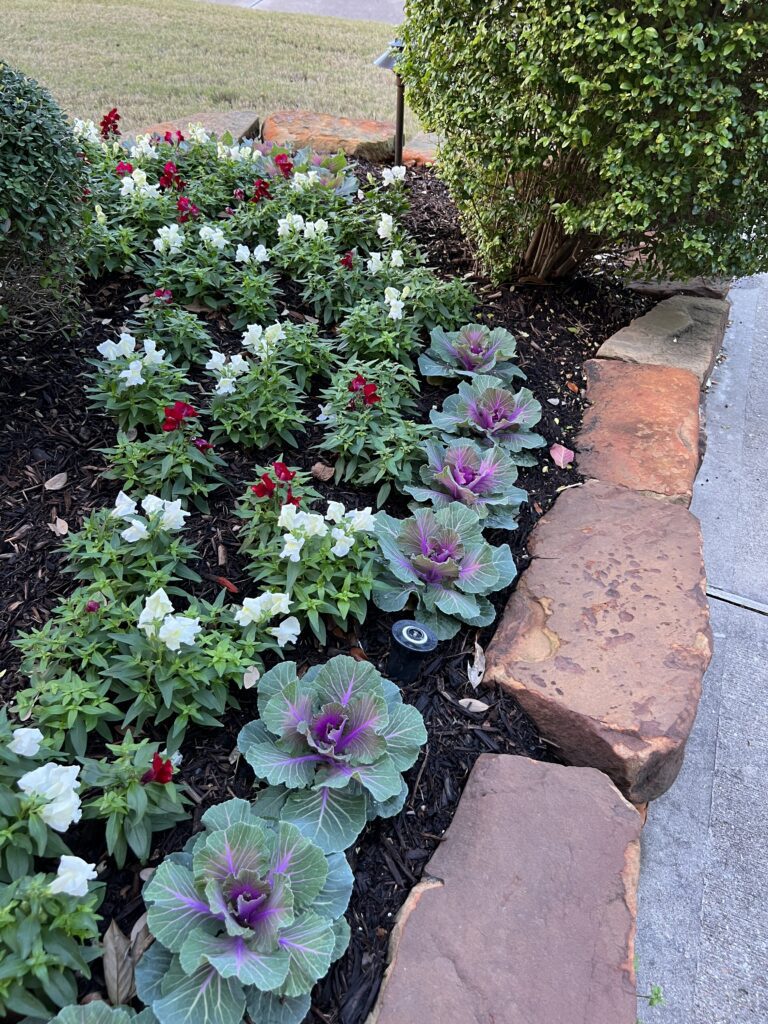
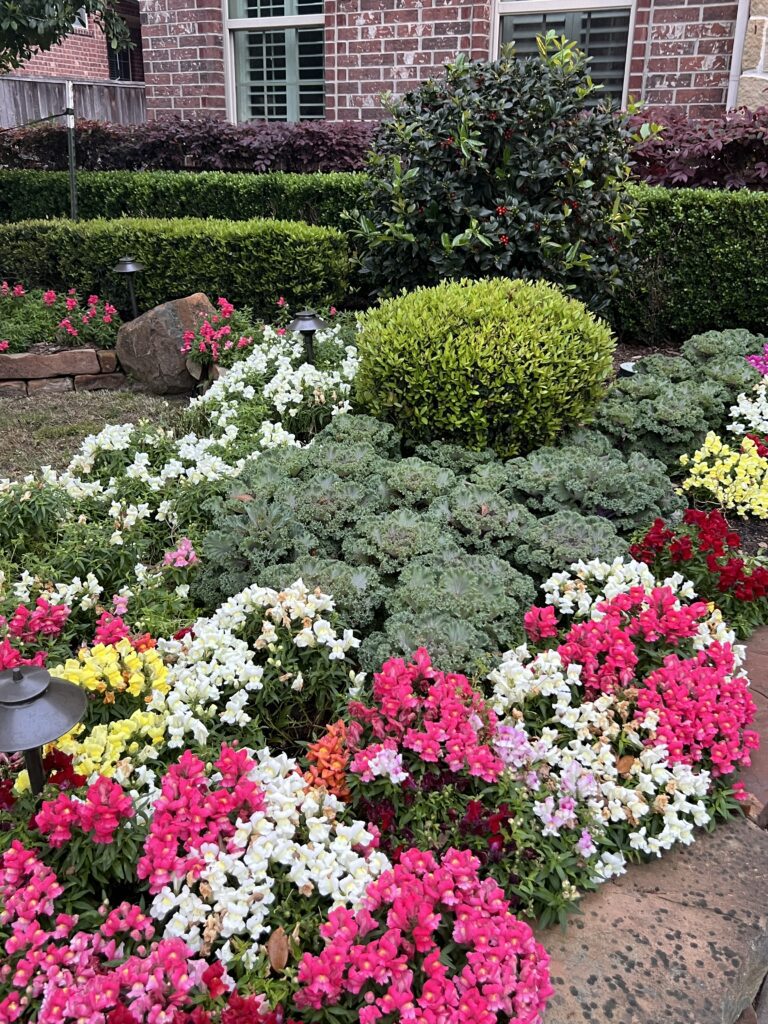
Winter landscapes in Katy and Fulshear don’t have to look dull. With the right combinations of cool-season flowers and ornamental foliage, your flower beds can stay colorful long after summer blooks have faded.
From tall snapdragons to cheerful violas and silvery Dusty Miller, winter plantings offer plenty of ways to refresh your front yard, brighten an entrance, or add curb appeal to an HOA or commercial property.
At JMAS Landscaping, we help homeowners and property managers create seasonal displays suited to their landscape’s sunlight, drainage, and overall design. Here are 10 winter planting options to consider for winter color in Katy, Fulshear, and surrounding West Houston communities.
When Should You Plant Winter Flowers in Katy?
Late October through November is often a good window for installing cool-season flowers in our area, once the persistent summer heat has eased. Planting conditions matter more than a specific date, especially during unusually warm falls.
Different plants also have different needs. Pansies and cyclamen appreciate cooler conditions, while cold tolerance varies across the plants on this list. A successful winter display starts with choosing the right plants for each location and preparing for occasional freezes.
Mature sizes are approximate and vary by variety and growing conditions. Check the plant tag before choosing spacing.
1. Snapdragons: Height and Colorful Flower Spikes
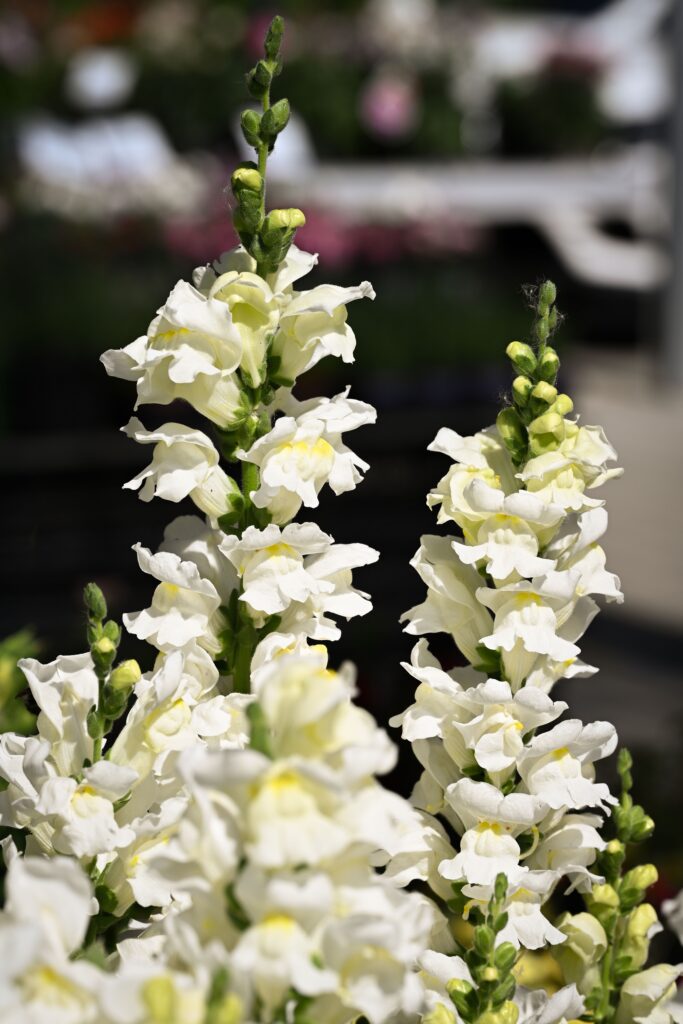
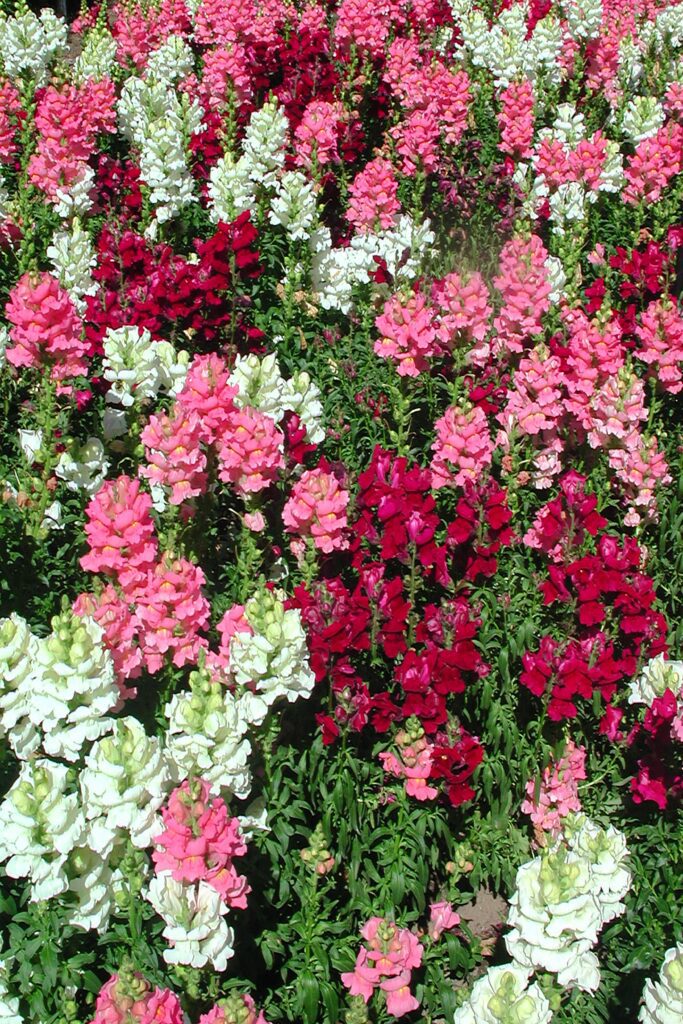
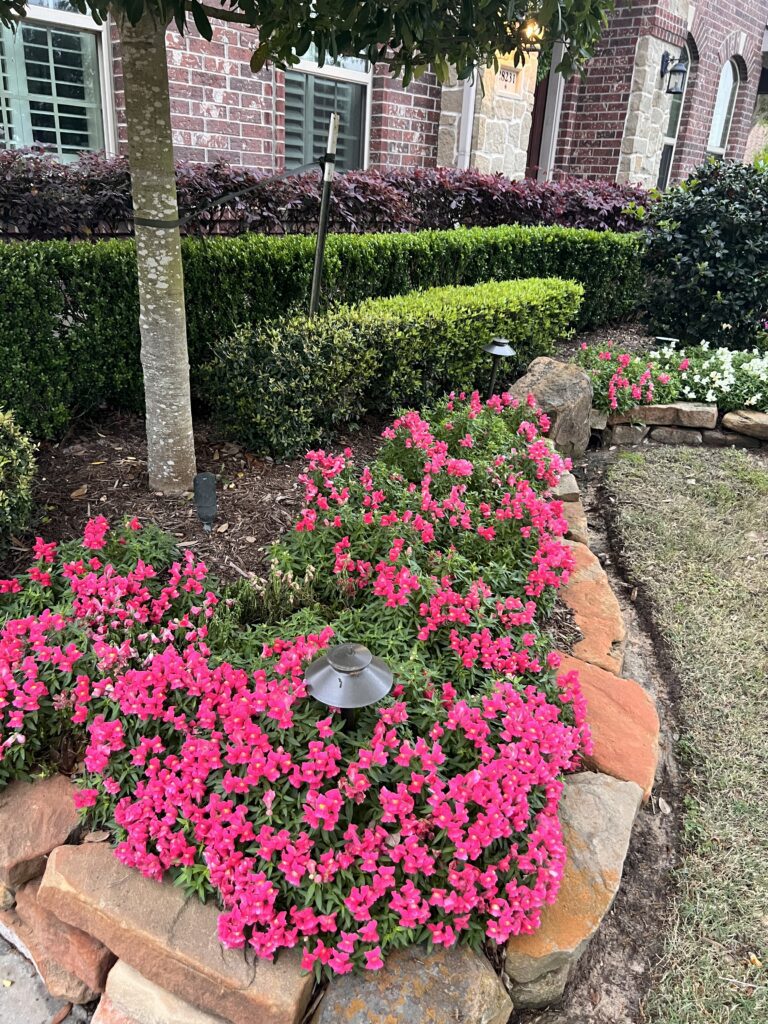
Snapdragons add vertical interest to winter flower beds. Their upright blooms create a beautiful backdrop for shorter plants and help a seasonal display stand out from the street.
Available in shades of pink, red, yellow, white, orange, and purple, snapdragons work with many landscape styles. Choose varieties carefully: dwarf and taller selections have very different space requirements. The Sonnet series grows approximately 18–24 inches tall. Snapshot and Snaptini are examples of dwarf series.
Approximate mature size: 6–36 inches tall and 6–24 inches wide, depending on the variety.
Best placement: Sunny beds with good drainage. Use taller varieties toward the back and compact varieties closer to the front.
Design idea: Pair pink snapdragons with purple violas and silver Dusty Miller.
2. Dusty Miller: Silver Foliage That Pulls a Design Together
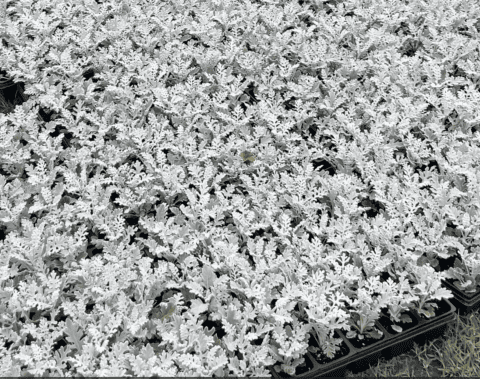
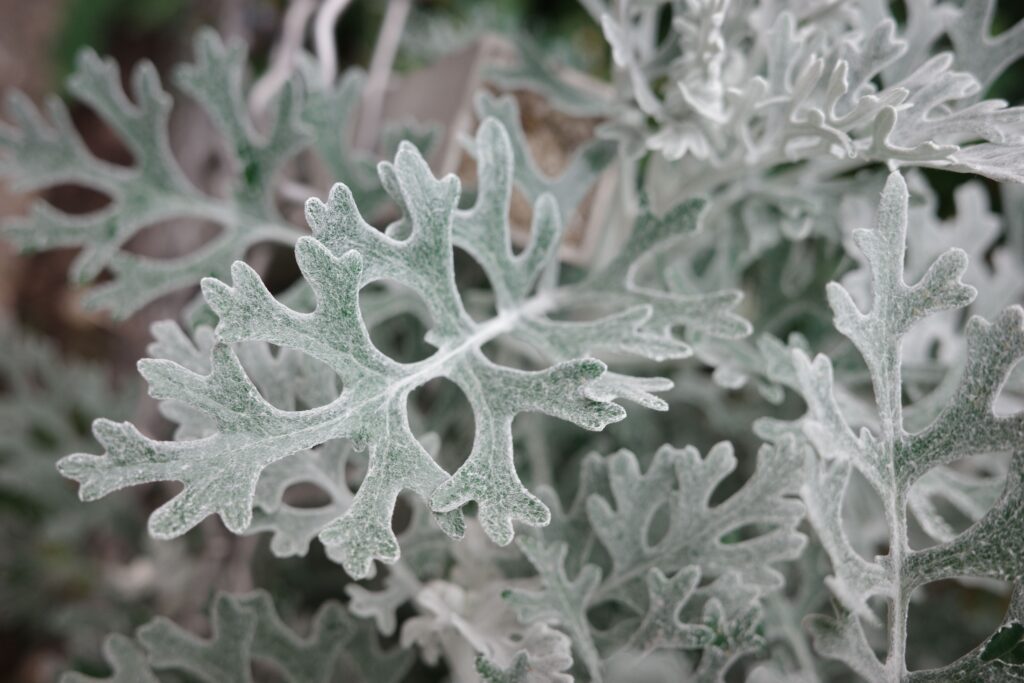
Dusty Miller earns its place in a winter display through its foliage rather than its flowers. Its soft, silver-gray leaves provide contrast and help neighboring blooms stand out.
Use it to soften bold colors, repeat a silver accent throughout a bed, or create a defined edge along a walkway. Dusty Miller prefers sun to very light shade and well-drained soil. Avoid keeping its roots constantly wet. Different varieties offer different leaf shapes. The ‘Silver Dust’ variety has finely divided, lace-like foliage, while ‘New Look’ has broader leaves.
Note: Overwatering and poor drainage can cause root rot. Dusty miller is toxic to pets and humans if ingested.
Approximate mature size: 12–24 inches tall and wide, depending on the variety.
Best placement: Sunny borders, mixed flower beds, and containers.
Design idea: Combine Dusty Miller with red dianthus and white pansies for a crisp, coordinated look.
3. Lobelia: Delicate Blooms for Edges and Containers
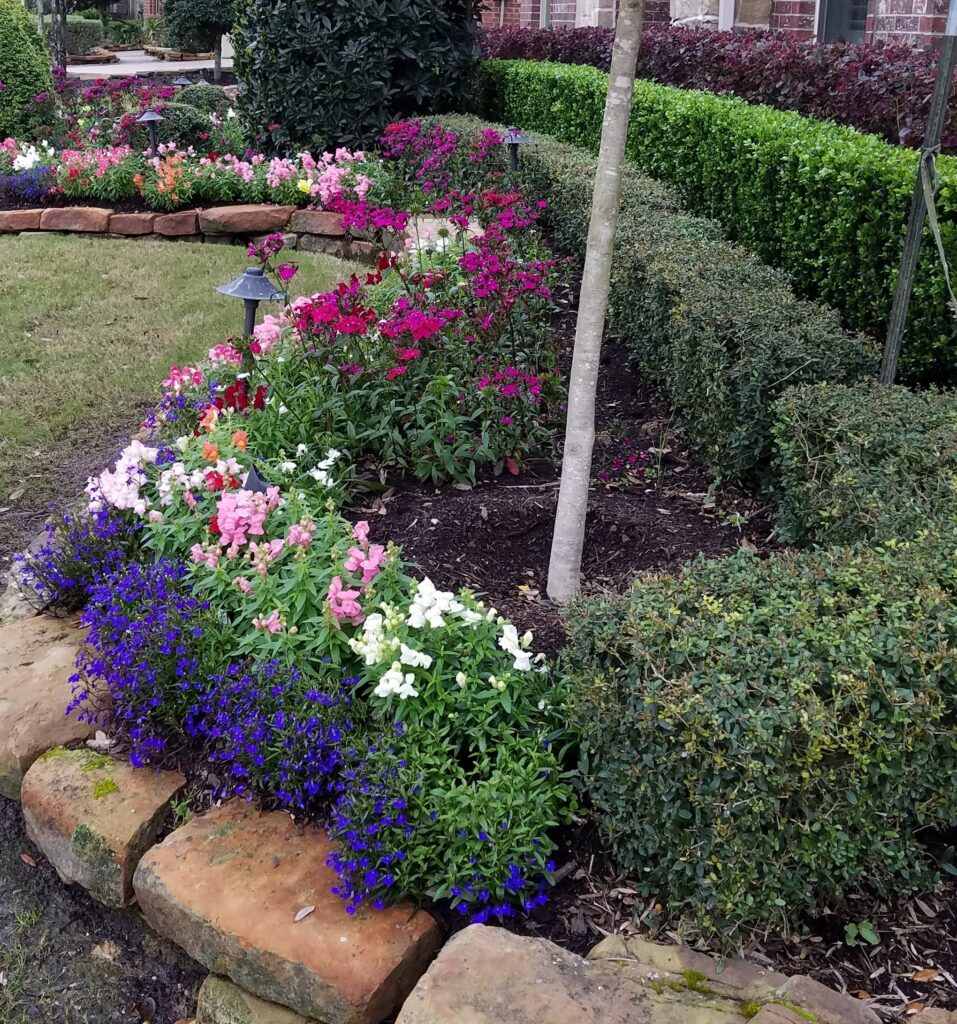
Annual bedding lobelia brings small blue, violet, purple, or white flowers to cool-season arrangements. Depending on the variety, it can form a low mound or trail over the edge of a planter.
Lobelia enjoys cool weather, but it is sensitive to frost. In our area, it works best as a more protected seasonal accent rather than the foundation of an exposed winter bed, especially with the hard freezes we have experienced the last few years. Keep the soil evenly moist, but avoid waterlogged conditions.
Approximate mature size: 6–12 inches tall and 12–24 inches wide, depending on the variety.
Best placement: Containers or sheltered borders with morning sun and some afternoon shade. Keep soil evenly moist with good drainage.
Design idea: Add blue lobelia around white blooms in a patio container. Move the container into a garage or another protected area during freezing weather.
4. Ornamental Cabbage & Kale: A Bold, Rosette-Shaped Accent
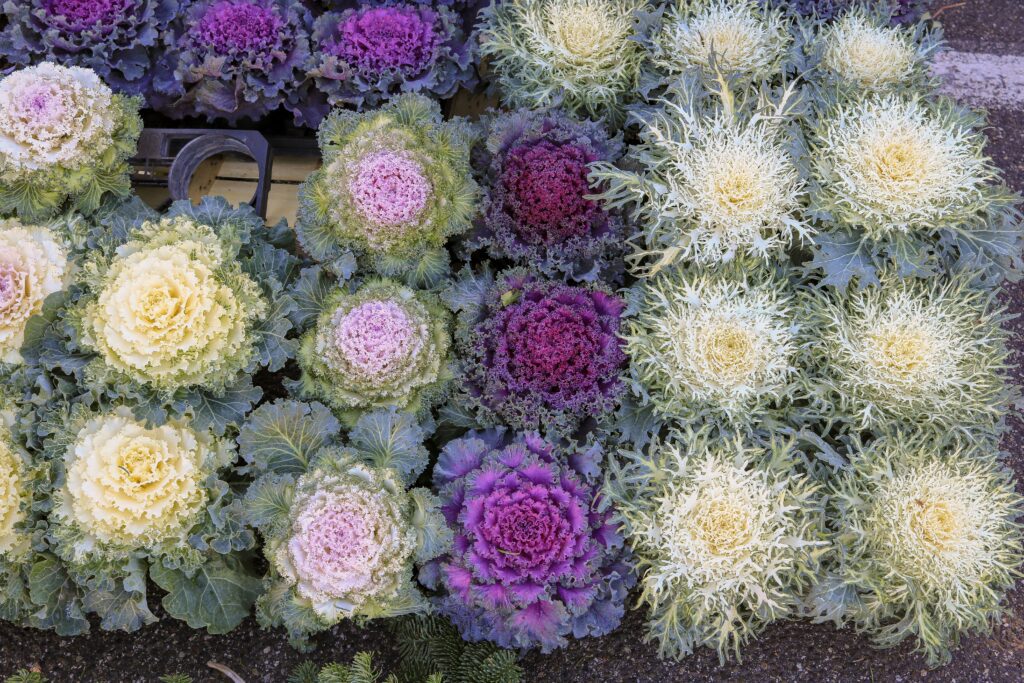
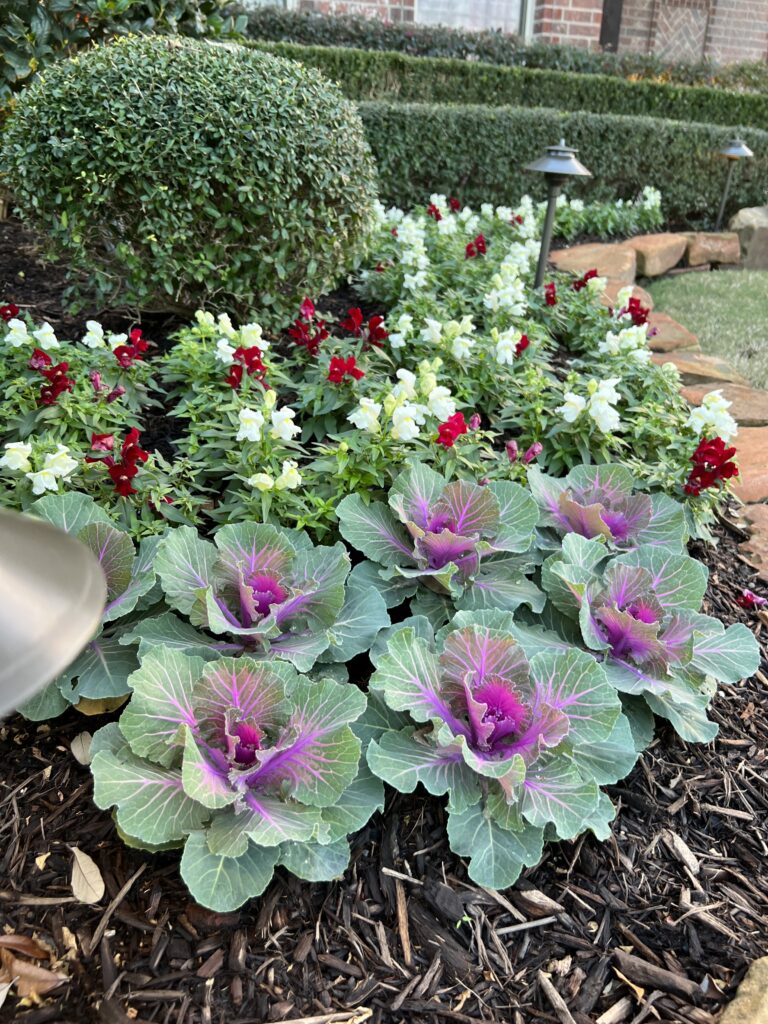
Ornamental kale adds texture with its curled or fringed leaves. Depending on the variety, its center may develop shades of pink, purple, or creamy white as temperatures cool.
Although often called “flowering kale,” its decorative leaves provide the color. It creates a strong accent among smaller flowers and helps a bed look full even when flowering slows.
Ornamental cabbage offers a similar color palette to kale, usually with smoother leaves and rounded rosettes. Its shape creates a focal point that contrasts nicely with upright snapdragons or small pansy blooms.
Give each plant enough room to develop. Crowding young plants can hide their distinctive shape as the planting matures.
Approximate mature size: Many bedding selections reach approximately 12–18 inches tall and wide; larger varieties need more room.
Best placement: Sunny entrance beds, borders, and large containers.
Design idea: Use creamy white ornamental cabbage with burgundy pansies and Dusty Miller. Mix purple ornamental kale with white violas for a simple winter planting.
5. Dianthus: Bright Blooms with a Neat Shape
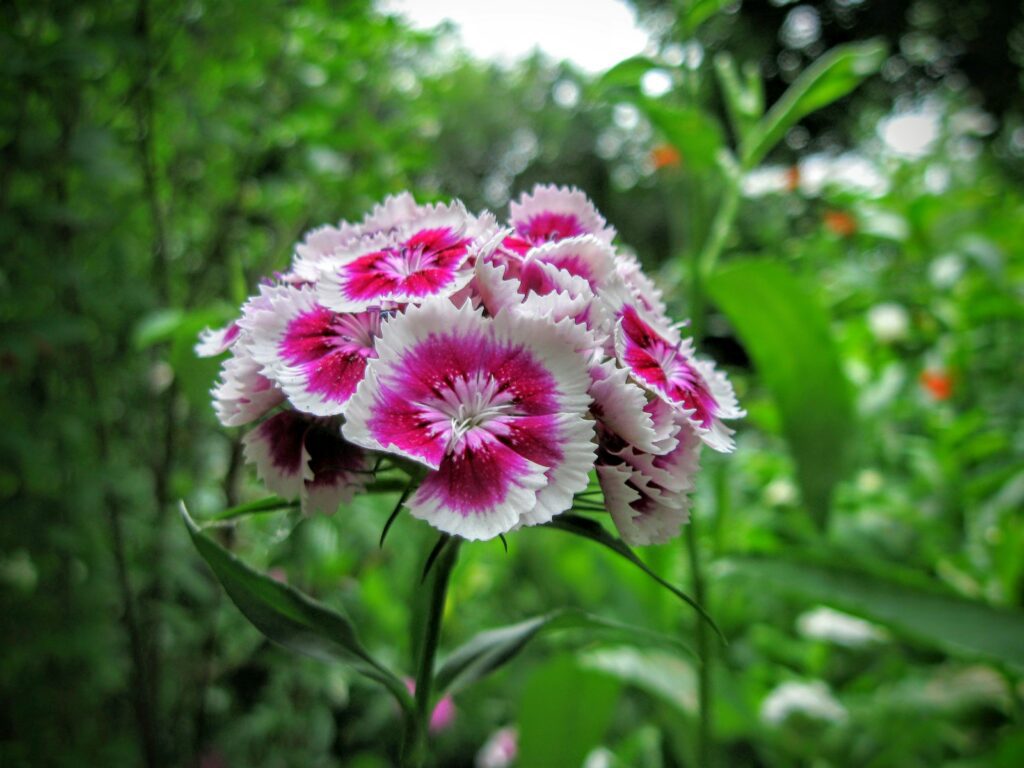
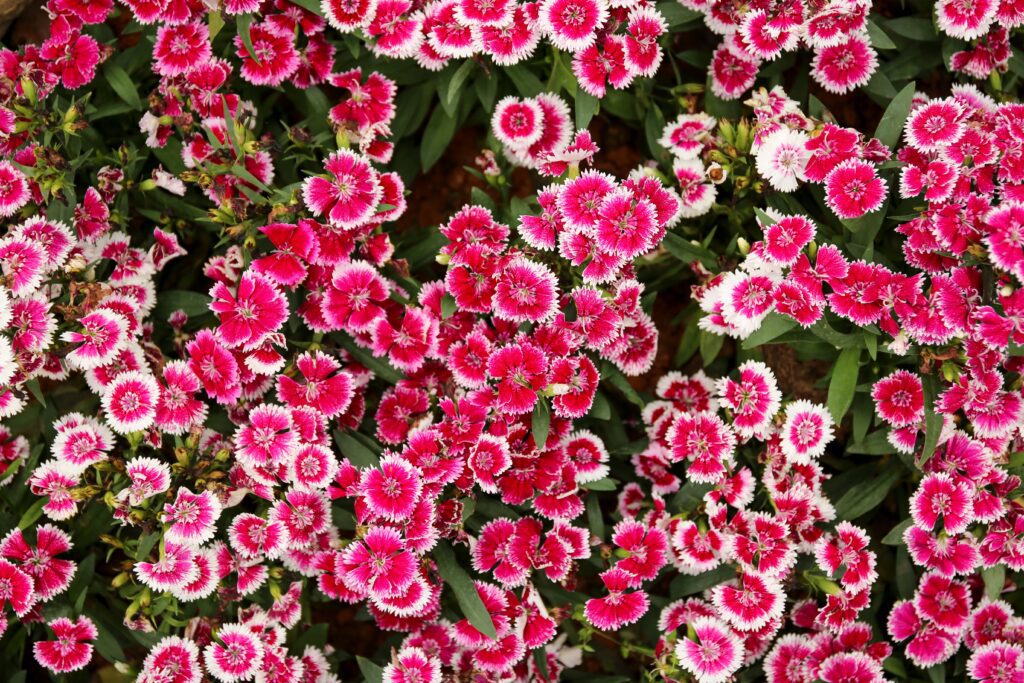
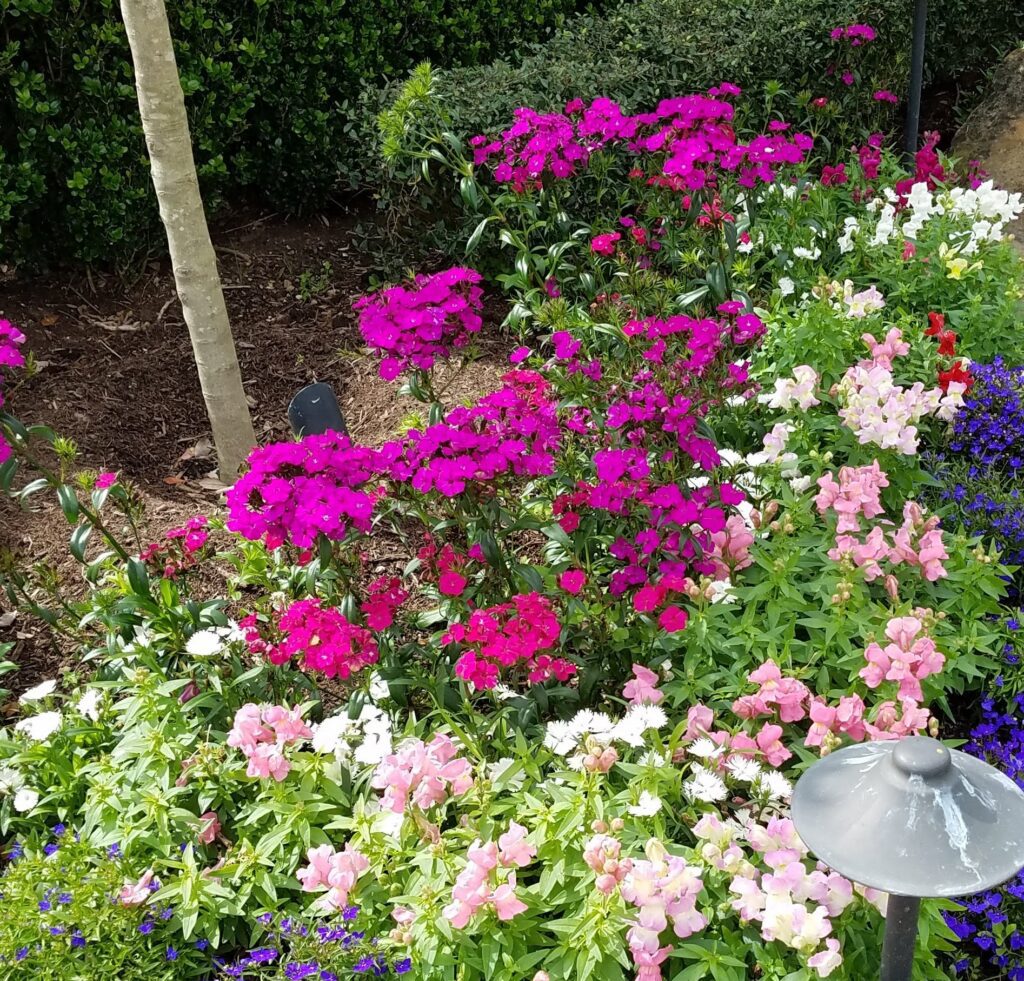
Dianthus, a member of the carnation family, adds clusters of flowers in shades of pink, red, white, and combinations of these colors. Its petals often have fringed edges, giving the blooms a delicate appearance.
Compact bedding varieties work well along paths and at the front of flower beds. Removing faded blooms helps keep plants tidy and encourages continued flowering. For a taller accent, the Amazon series grows approximately 18–36 inches tall and works best behind shorter flowers rather than along the front edge.
Approximate mature size: Varies by series; Amazon dianthus grows approximately 18–36 inches tall and 10–12 inches wide. Choose compact bedding selections for low borders.
Best placement: Sunny beds with well-drained soil.
Design idea: Plant pink dianthus beside white alyssum for a soft border.
6. Calendula: Warm Yellow and Orange Color
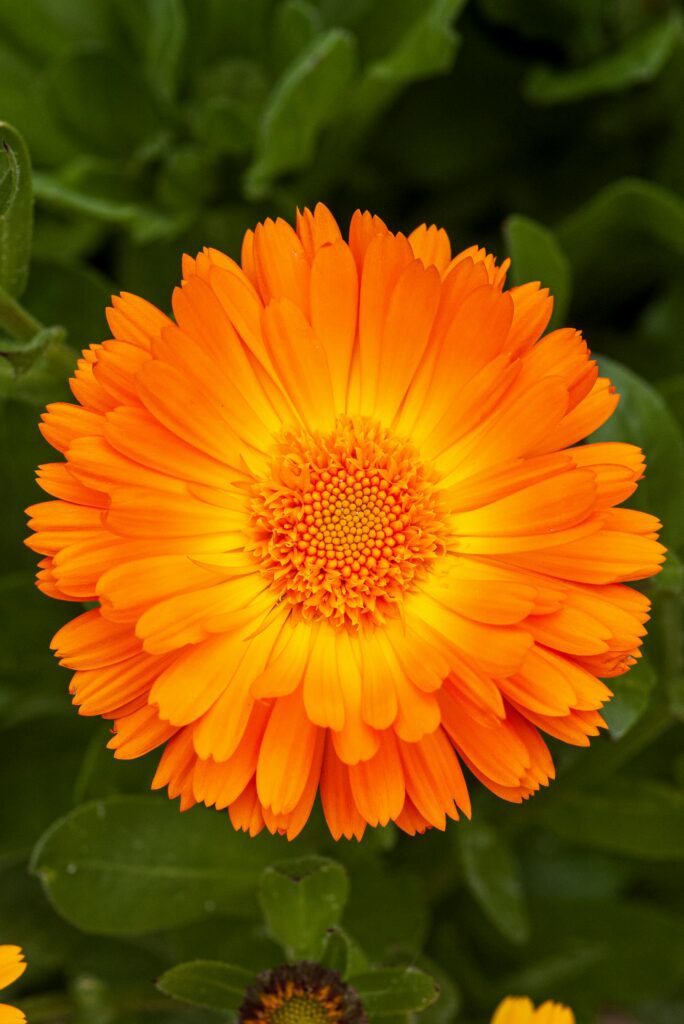
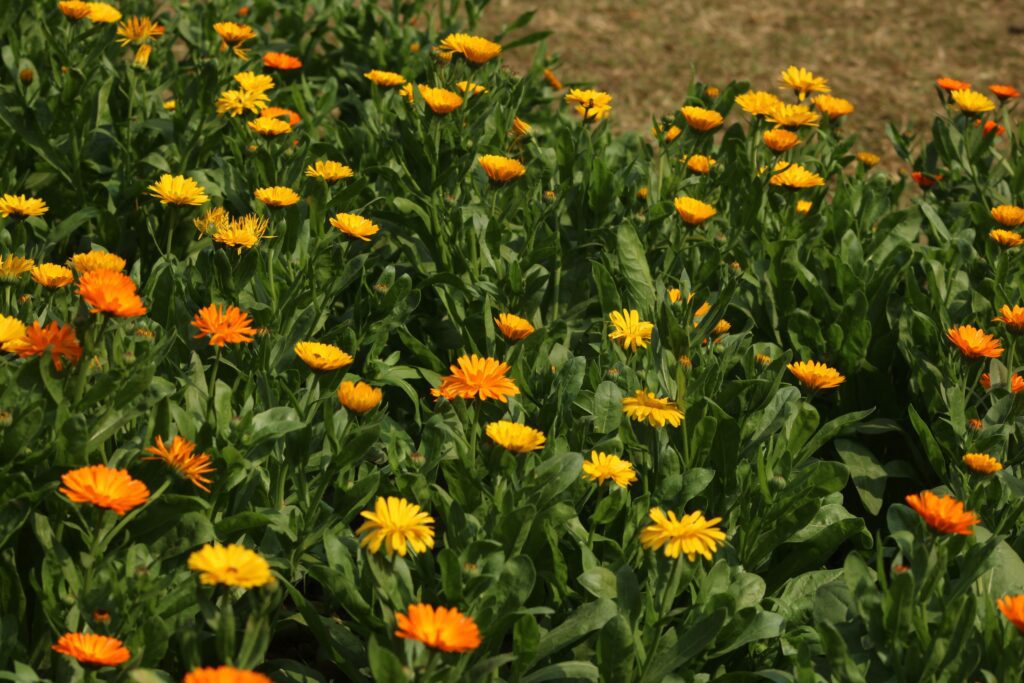
Calendula brings sunny yellow and orange blooms to the cool-season garden. Its daisy-like flowers are a good choice when you want a warmer palette instead of the pinks and purples common in winter displays.
Also called pot marigold, calendula is different from the familiar warm-season bedding marigolds. It makes a cheerful addition to beds near patios, walkways, and gathering spaces.
Approximate mature size: 10–24 inches tall and wide, depending on the variety.
Best placement: Sunny flower beds with good drainage.
Design idea: Pair orange calendula with purple pansies for a bold contrast.
7. Pansies: Large Blooms with Plenty of Personality
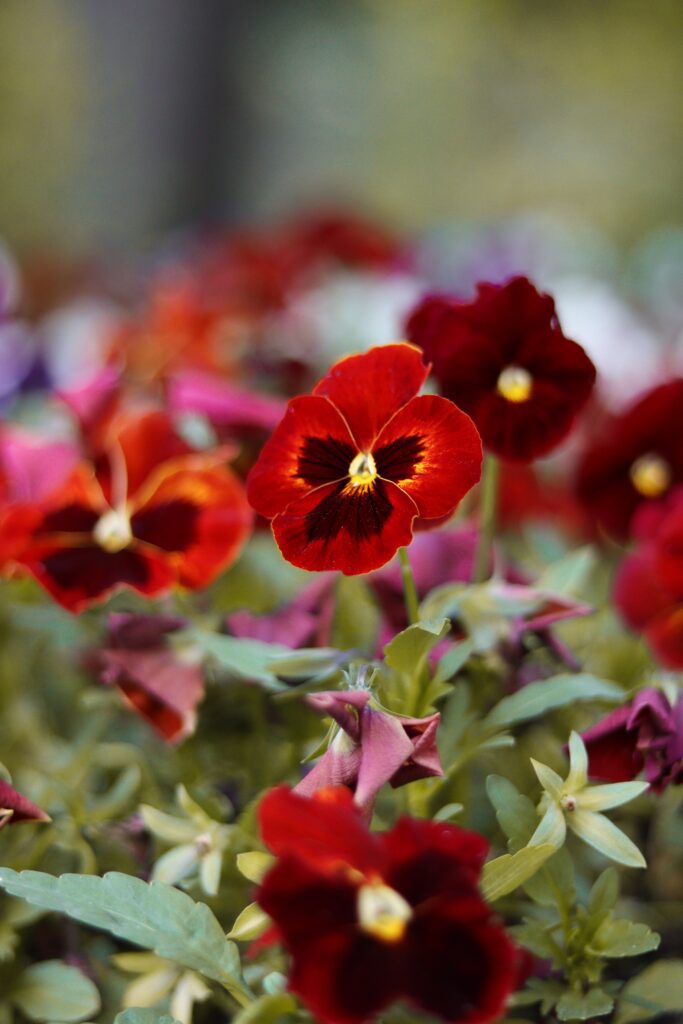
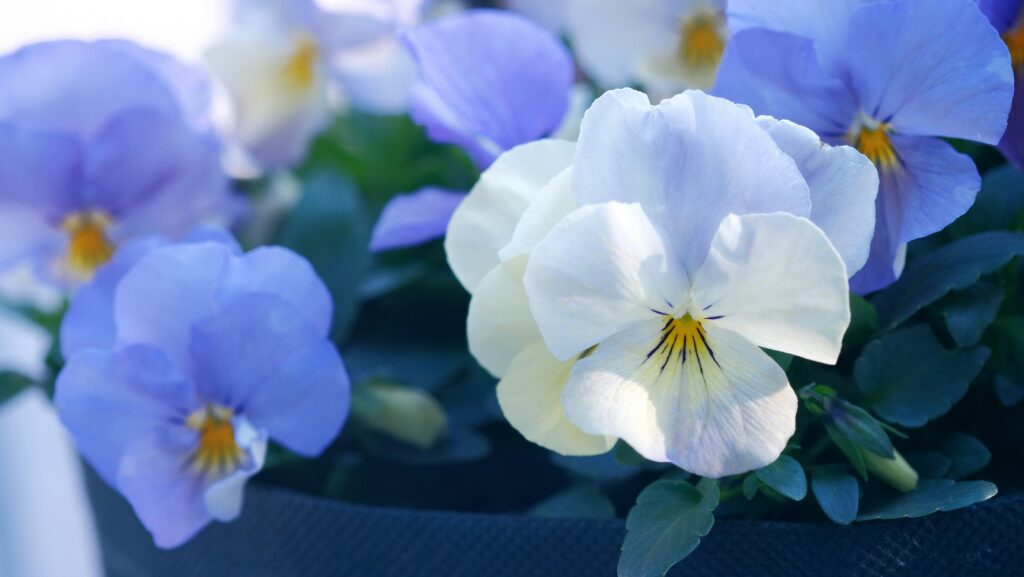
Pansies are a familiar choice for winter seasonal color. Their broad petals, colorful markings, and wide range of shades make them useful in both traditional and contemporary landscapes. A blotch pansy is a pansy with a dark, contrasting mark in the center of its petals, often giving the flower a “face-like” look. Clear-faced pansies lack the prominent dark blotch found on faced varieties.
Use one color for a clean, consistent display or combine two complementary shades. Plant after temperatures cool, and remove faded flowers to keep the display looking fresh.
Approximate mature size: 4–10 inches tall and approximately 8–15 inches wide, depending on the variety.
Best placement: Sunny winter beds, walkway borders, and containers.
Design idea: Combine yellow pansies with purple snapdragons for a vibrant entrance planting.
8. Violas: Small Flowers with a Big Visual Impact
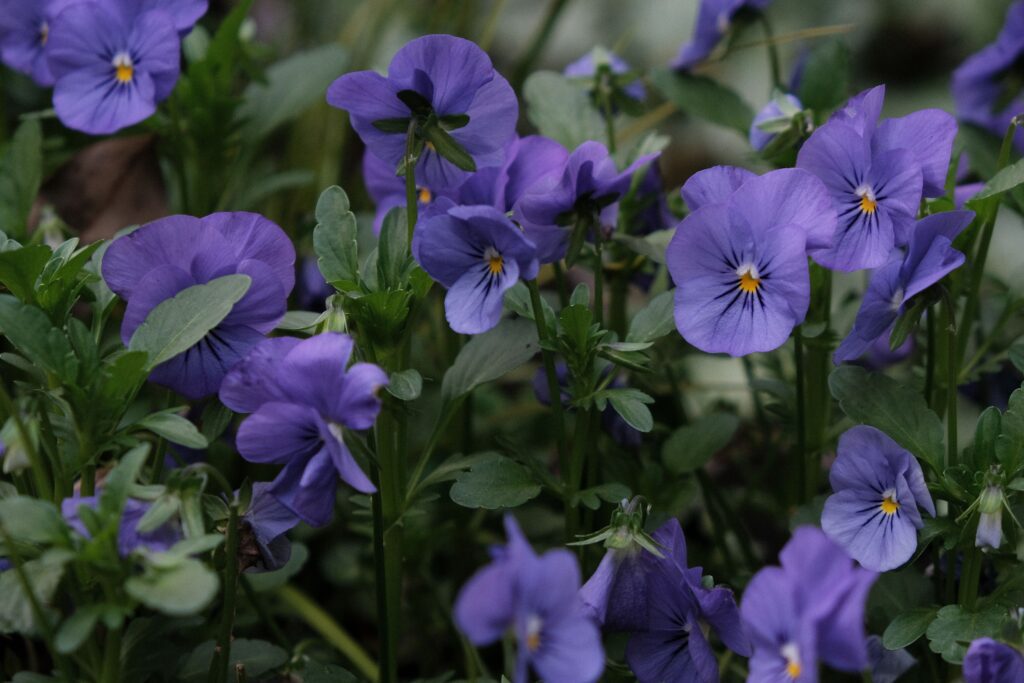
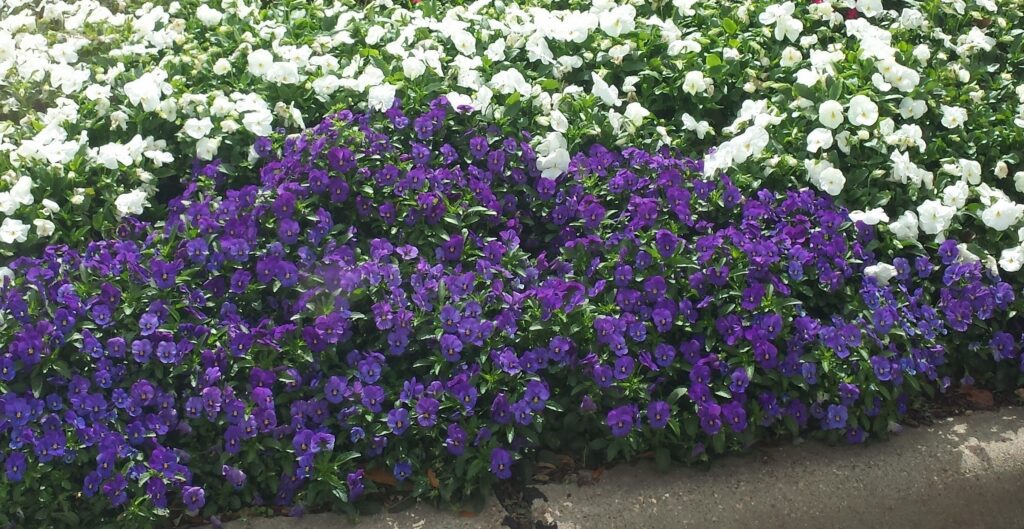
Violas have smaller flowers than pansies, but their abundance of blooms creates a colorful, detailed display. They are especially useful along bed edges and beneath taller seasonal plants.
Purple, blue, yellow, white, and mixed-color varieties give you plenty of flexibility. Repeating one viola color throughout a bed can help tie the entire design together.
Approximate mature size: Around 6–10 inches tall and 8–12 inches wide, depending on the variety.
Best placement: Sunny borders, mixed beds, and containers.
Design idea: Use purple violas in front of yellow snapdragons, with Dusty Miller providing contrast.
9. Sweet Alyssum: A Soft, Fragrant Border
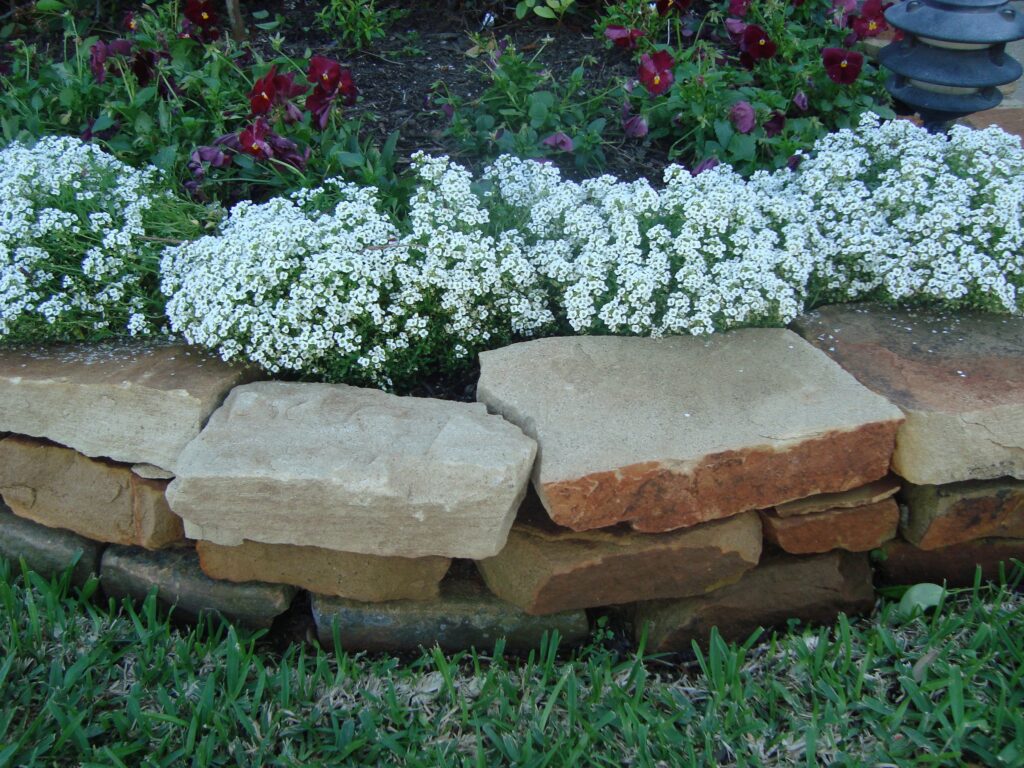
Sweet alyssum produces clusters of tiny flowers with a light, honey-like fragrance. Its low growth makes it useful for softening bed edges and spilling gently over containers.
White alyssum complements almost any flower color, while lavender and purple selections can create a softer palette. It appreciates cool conditions and soil that drains well. White alyssum is generally the easiest color for us to source; availability of purple selections varies.
Approximate mature size: Compact bedding selections vary; Clear Crystal sweet alyssum grows approximately 6–10 inches tall and 12–14 inches wide. Larger hybrids may spread farther.
Best placement: Bed edges, pathways, and mixed planters.
Design idea: Place white alyssum in front of pink dianthus for a layered border.
10. Cyclamen: Elegant Color for Shaded Entrances
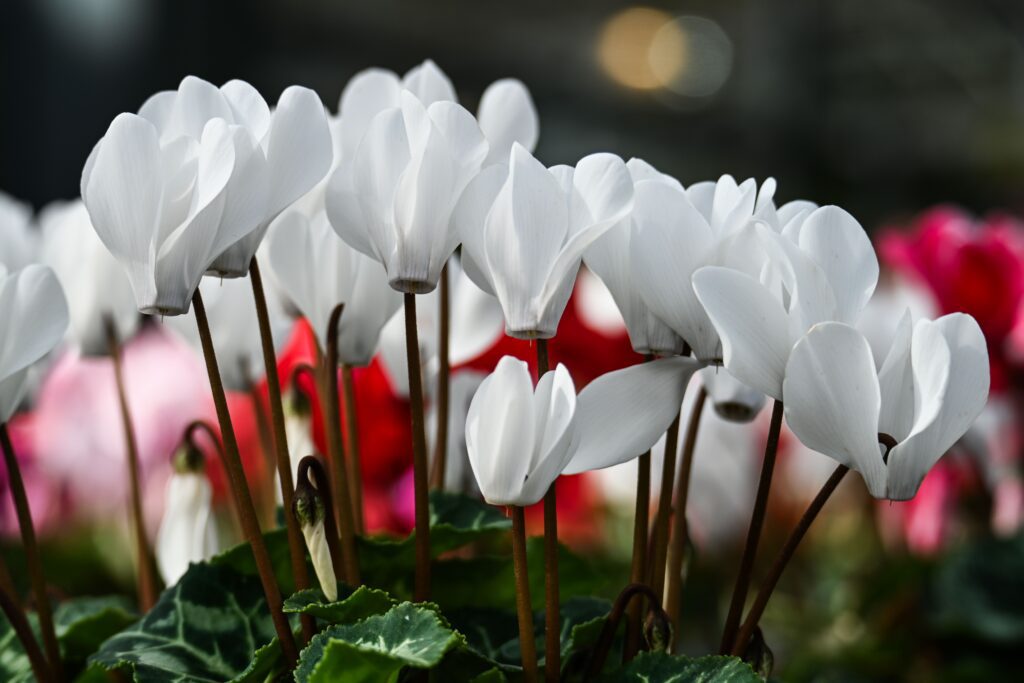
Florist’s cyclamen offers distinctive swept-back petals above attractive, patterned heart-shaped leaves. Red, pink, white, and purple varieties can brighten an entryway or sheltered patio where sun-loving flowers may struggle.
Cyclamen needs a protected location with bright shade or gentle morning sun. It is more cold-sensitive than many winter bedding plants, making movable containers a practical option when freezing weather approaches.
Approximate mature size: 6–9 inches tall and wide for compact selections; larger varieties may need more room.
Best placement: Sheltered porch planters, shaded entrances, and protected containers.
Design idea: Group white cyclamen in matching pots for a simple, elegant entry display.
Tips for Successful Winter Flower Beds
A colorful planting needs more than attractive flowers. Before installing winter seasonal color, consider these essentials:
- Check drainage. Flower beds should drain well after rainfall. Address persistent soggy areas before planting.
- Match plants to sunlight. A sunny entrance bed and a shaded porch need different selections.
- Allow room to grow. Follow spacing recommendations for the specific variety.
- Adjust irrigation. Check soil moisture and account for rainfall rather than keeping the summer watering schedule.
- Feed appropriately. Use fertilizer suited to the planting and follow label directions.
- Prepare for freezes. Cool-season plants vary in hardiness. Protect vulnerable selections and move tender containers into shelter when needed.
Winter flowers may bloom more slowly during cold stretches and resume as conditions improve. Even hardy plants can suffer damage during severe or prolonged freezes.
Additional Gardening Resources
For more information about seasonal flower beds and regional plant selections, explore:
- Texas A&M Aggie Horticulture: Seasonal Color—Care and Management — Information on preparing and caring for seasonal planting beds.
- LSU AgCenter: Cool-Season Bedding Plants — Selected varieties evaluated for Louisiana landscapes, a useful regional reference when considering Gulf Coast seasonal color.
Refresh Your Landscape with Winter Color
A well-designed winter planting brings together flowers, foliage, height, and texture. Whether you prefer a simple two-color combination or a layered display, the right selection can keep your property welcoming through the cooler months.
JMAS Landscaping provides seasonal color installation and landscape design improvements for homes, HOA communities, and commercial properties throughout Katy, Fulshear, and surrounding West Houston areas.
Ready to refresh your flower beds? Contact JMAS Landscaping to request an on-site estimate and plan your winter seasonal color.

